How To Conduct A Good And Useful Performance Appraisal

How to conduct a good and useful performance appraisal


Conducting a good and useful performance appraisal involves careful planning, effective communication, and constructive feedback. Here’s a step-by-step guide:


Set Clear Objectives:

Define the purpose and objectives of the performance appraisal. Are you focusing on recognizing achievements, identifying areas for improvement, or both?

Establish Criteria:

Determine the key performance indicators (KPIs) or criteria against which the employee’s performance will be evaluated. These could include job-specific goals, competencies, or behavior standards.

Gather Data:

Collect relevant information about the employee’s performance throughout the appraisal period. This could include project outcomes, client feedback, productivity metrics, and any other relevant data.

Schedule the Meeting:

Set a mutually convenient time and place for the performance appraisal meeting. Ensure that both you and the employee have enough time to prepare and discuss.

Encourage Self-Assessment:

Ask the employee to do a self-assessment before the meeting. This allows them to reflect on their performance, strengths, and areas for improvement.

Provide Constructive Feedback:

During the meeting, offer specific examples of the employee’s performance, both positive and negative. Be objective, fair, and focus on behaviors rather than personalities.

Set Goals for Improvement:

Collaboratively identify areas for development and set clear, achievable goals for improvement. These goals should be SMART (Specific, Measurable, Achievable, Relevant, Time-bound).

Acknowledge Achievements:

Recognize and appreciate the employee’s achievements and contributions. Positive reinforcement motivates employees and reinforces desirable behaviors.

Discuss Career Development:

Use the performance appraisal as an opportunity to discuss the employee’s long-term career goals and aspirations. Offer support and guidance on how they can progress within the organization.

Document the Discussion:

Keep detailed records of the performance appraisal meeting, including the topics discussed, agreements reached, and action plans. This documentation serves as a reference for future appraisals and performance discussions.

Follow-Up:

Schedule regular follow-up meetings to track progress on the goals set during the performance appraisal. Provide ongoing support and feedback to help the employee succeed.

Seek Feedback:

Encourage the employee to provide feedback on the appraisal process. Listen to their suggestions for improvement and make necessary adjustments for future appraisals.

By following these steps, you can conduct a performance appraisal that is not only effective in evaluating performance but also contributes to employee development and organizational success.

 Person who conduct the appraisal

 To avoid any biased appraisal, a company needs to ensure the appraisal is conducted in a fair and just manner.

Who check on the work of the person who conduct the appraisal?

Always we come across a lot of companies only having one person conducting the appraisal, and the employees are on his mercy.

The top management always rely on the work on the head of departments and assume he has conducted the appraisal fairly and justly.

I once asked one of the head of departments on how he conducted his appraisal.

he said he took feedback from the co workers of the employee being appraised.

Then i asked him how did he ascertain the co workers will not bad mouth the employee, especially when he is the group leader

If there is no check and balance in performance appraisal, we will not get a fair assessment of the staffs.

Conclusion.

Performance appraisal is a two ways business tools, management can make use of this to find out how to improve the process and workflow of the company.

Employees can , through the appraisal, find out how serious the company is appreciating the contributions of the employees.


 

Can AI Enhance The Quality Of Work Performance

Now, you might be wondering how exactly artificial intelligence (AI) can up the game when it comes to work performance. Truth be told, AI isn’t just about automating tasks; it’s about enhancing the quality of work we do on a daily basis. By taking over the repetitive and time-consuming tasks, AI gifts us the time to concentrate on more strategic and creative endeavors.

Take, for example, the role of AI in data analysis. AI algorithms are amazing at sifting through vast amounts of information quickly and accurately, way faster than any human ever could. It’s not just about speed though; it’s about making sense of the data. These sophisticated tools can spot trends and patterns that we might miss, leading to smarter business decisions based on hard evidence rather than gut feeling.

Let’s not forget the human-AI partnership, either. AI systems can provide real-time feedback and suggestions, proposing innovative solutions that perhaps wouldn’t have been considered otherwise. This symbiotic relationship paves the way for improved outcomes, elevating the performance bar in sectors ranging from healthcare to finance, from education to customer service.

And here’s the thing: as we lean more into AI, it doesn’t mean our skills become any less valuable. On the contrary, AI can boost our capabilities, encourage us to think differently, and push the frontiers of what we can achieve. Isn’t that something? Our focus shifts from mundane tasks to strategic thinking and innovation.

All these facets of AI’s intervention in our work lives lead seamlessly into the next big question: how can businesses, big or small, effectively harness the power of AI? That’s going to include not only the adaptation of current operations but also an understanding of how to merge the potential of AI with the irreplaceable value of human insight. But don’t worry too much about the ‘how’ – I’m here to guide you through it in the next section.

Navigating the AI Transformation: A Guide for Businesses

I’m here to help you with integrating AI into your business operations. It’s an exciting journey that’s going to include careful planning and strategic implementation. To start, you need to identify the processes within your business that are ripe for AI enhancement. Often, these will be tasks that involve data processing, repetitive actions, or pattern recognition – areas where AI excels.

Once you’ve pinpointed potential AI applications, the next step is selecting the right AI tools for your needs. There’s a lot of opportunity in choosing solutions that are tailored to your industry and specific business challenges. For example, retail businesses may benefit from AI-driven inventory management, while a financial firm might use AI for risk analysis and forecasting.

But integrating AI isn’t just about technological upgrades; it’s also about adopting a human-centered design approach. This means considering how AI systems will interact with employees and affect workflow. You can always adjust your approach down the road, but initial planning should prioritize user experience to ensure smooth adoption.

Moreover, measuring the impact of AI is crucial. Set clear performance indicators related to efficiency, accuracy, and cost savings. This will provide tangible evidence of AI’s value to stakeholders and help guide future investments.

If you want to ensure the success of AI in your work processes, you’ve got to involve your employees from the outset. Educate them about the benefits of AI and how it can make their work easier and more impactful. By doing so, employees are more likely to embrace AI and contribute to a positive transformation in the workplace.

Embracing Change Without Fear: AI’s Impact on the Workforce

Now, you’re going to find out about one of the most talked-about issues when it comes to AI at work: the fear of job replacement. It’s a legitimate concern, but it’s not the whole story. Artificial intelligence not only paves the way for efficiency but also enables us all to chase after the kind of work that’s uniquely human: creative, strategic, and deeply interpersonal.

As companies navigate the integration of AI, it’s absolutely crucial to align the transition with efforts to upskill their employees. From educational initiatives to hands-on AI collaboration, there’s an expansive toolbox available to make sure that everyone’s on board and no one is left behind. This isn’t just about keeping jobs. It’s about growing them and empowering employees to work smarter, not harder.

Creating a workplace culture that views AI as a partner, rather than a replacement, catalyzes a collective leap forward. When adopted thoughtfully, AI can free us from repetitive tasks, allowing more room for the nuanced, complex work only humans can do. Inviting employees to participate in the AI evolution fosters an environment where workers feel valued and engaged, and that’s a true measure of success for any organization.

In my opinion, the profound potential of AI isn’t in what it can do alone but how it synergizes with human intellect and creativity. Choose to see AI as an opportunity for your team to achieve more, elevate their work experience, and undoubtedly contribute to an enriched, more dynamic workplace.

: A Comprehensive Guide To Crafting An Effective Business Plan

In the ever-evolving landscape of entrepreneurship, a well-structured business plan remains the cornerstone of success. Whether you’re launching a startup, seeking investors, or steering an existing business toward growth, a meticulously crafted business plan serves as your roadmap. It not only outlines your objectives but also delineates the strategies and tactics necessary to achieve them. In this comprehensive guide, we’ll walk through the essential components and steps to create a robust business plan.

Executive Summary:

The executive summary encapsulates the essence of your entire business plan. It provides a brief overview of your business concept, target market, competitive advantage, financial projections, and funding requirements. While it appears at the beginning of the plan, it’s often written last to ensure it accurately reflects the content of the document.

Business Description:

Here, you delve into the specifics of your business. Outline your mission statement, vision for the company, and the problem your product or service solves. Describe your industry, target market, and the unique value proposition that sets your business apart from competitors.

Market Analysis:

Conduct a thorough analysis of your industry and target market. Identify trends, market size, growth potential, and key competitors. Understand your customers’ needs, preferences, and behaviors. This section should demonstrate a deep understanding of the market landscape and how your business fits into it.

Organization and Management:

Detail the structure of your business, including the legal structure, ownership, and key personnel. Highlight the skills and experience of the management team and any advisory board members. Investors want to know that your team has the expertise to execute the business plan successfully.

Product or Service Line:

Provide a comprehensive description of your offerings. Explain the features and benefits of your products or services and how they address the needs of your target market. If applicable, discuss your research and development process and any intellectual property protections.

Marketing and Sales Strategy:

Outline your plan for attracting and retaining customers. Define your marketing channels, pricing strategy, and sales approach. Consider how you’ll position your brand in the market and differentiate yourself from competitors. Include a sales forecast that outlines your expected revenue streams.

Funding Request:

If you’re seeking funding, clearly articulate your funding requirements. Specify the amount of funding you need, how you’ll use the funds, and the potential returns for investors. Provide realistic financial projections to support your funding request.

Financial Projections:

Develop detailed financial forecasts, including income statements, balance sheets, and cash flow statements. These projections should be based on thorough research and realistic assumptions. Investors will scrutinize your financial projections to assess the viability and scalability of your business.

Appendices:

Include any supplementary materials that support your business plan, such as resumes of key team members, market research data, or legal documents. While not essential for all business plans, appendices can provide additional context and credibility.

Review and Revise:

Once you’ve drafted your business plan, take the time to review and revise it thoroughly. Seek feedback from mentors, advisors, or industry experts to ensure it’s comprehensive, coherent, and compelling. Update your business plan regularly to reflect changes in the market or your business strategy.

Crafting a business plan is not a one-time task but an ongoing process that evolves as your business grows and the market shifts. By following this comprehensive guide and investing the necessary time and effort, you’ll create a roadmap that guides your business toward success. Remember, a well-prepared business plan not only attracts investors but also serves as a strategic tool for decision-making and execution.

Conclusion

Do you need a business plan, if you do, you can reach me to discuss.

We provide this type of service to suit your business need, be it a plan to secure financing facility, a plan to expand your business or even a plan to pitch for investors.

Environment, Social and Governance

Environment, Social and Governance, the three words now in most of the Board of directors mind.

Whether they know what these three words entail and cover and what need to be done is another matter.

So What is Environment, Social and Governance or commonly known as ESG?

The whole business world is talking about ESG and every company jumps onto the bandwagon.

Whether they really care or not is another matter, as long as the public see they produce long reports at the end of the year in their annual report especially those public listed companies, that mean compliance with the listing requirement.

In Singapore case, that means they comply with SGX listing requirement in terms of reporting.

Does the authority really check whether the companies comply with the requirement?

Or is it another publicity stunt done for the sake of showing compliance.

Businessmen will tell you ESG will increase their cost of operation, therefore, to comply with it, they need additional fund to do so.

Now on Environment.

Nowadays every one cares about the earth and trying to make sure climate change impact is at the minimum.

The big question is – is every one serious about this issue? environment?

Nowadays public listed companies are required to produce in its annual report on sustainability and diversity disclosure in the annual report,

So, does it help in improving the climate changes and save the EARTH?

For those who like to print the annual reports in hard copy, that mean more pages on the annual reports.

More pages in the annual report mean more papers being used to produce the annual report.

With the increase in pages in the annual report, the paper manufacturer needs to produce more papers, then they have to cut more trees in order to produce more papers.

So much for sustainability of environment.

The next question is whether the board members know what they are supposed to do on ESG?

It will be interesting to know as we can notice most of the independent directors on boards are not that equipped in the subject matter.

Every good learning issue start from home.

If we want to do good, we have to start somewhere.

Therefore, to really deal with ESG, every one needs to put in his share of the work.

People nowadays have the habit and mentality of this is no my problem, it is the responsibility of the authorities and the government of the day to take care of the environment issue, and in the broader sense, ESG.

Carbon emission is one issue which affect the climate.

So can the directors go to meeting without taking a motor vehicle?

walk up the stair instead of taking the lift, since lift use power to get it moving.

And the power is from power station which is using coal, fuel, diesel to generate, and the emission of carbon is an issue.

Now on the Social issue.

Most of the time, if you ask a company to shoulder social responsibility, they will just tell you the bottom line is more important.

The motto of we must achieve a positive bottom line at all cost is more important than anything else.

So now companies need to take care of the Social factor in the ESG.

What do the companies need to do in term of Social factor in ESG?

the Social factor is about how the company manage its relationship with its employees as well as the community in which it is operating.

The relationship between the employer and employees are evolving, especially in the last few years at the height of the COVID 19 pandemic.

How a company treats its employees, inspire the employees, up skill and engage the employees go a long way to decide whether the employers are able to retain the employees.

Nowadays employees will look at how the employers take care of the staffs to decide whether it is worth to continue working in that environment.

People are more aware of the surrounding and working environment especially after going through the pandemic.

Employees now more likely choose to work with an employer who has social responsibility and showing more humane touch.

Those whose main objective is to make as much as possible at the exploitation of the staffs will find difficulty in keeping good employees.

Therefore, to drive ESG forward, human capital is the main contributing factor, and driving force to determine whether your effort in achieving ESG target is reachable or not.

now let talk about governance.

Most people have an impression that governance is just making sure every thing is done according to the rules and regulations.

Actually governance entail larger area than this.

Having a strong governance structure allow a company to ensure its business ethics and transparency are more visible and can reinforce trust in its leadership.

If a company is able to put in place a good governance policies, this will make the Board executing its fiduciary responsibility easier and at the same time, this can also help to manage the cost of operation.

Most people do not realize a good governance can help to reduce cost of operation.

When facing hard time, most businessmen like to take the easy way by cutting the staff force, instead of finding ways to reduce cost other than the human cost.

Cutting human capital must be the last resort for a company facing hard time.

Unfortunately, cutting human capital is the first step most businesses do when facing hard time.

By doing so, they seem to have forgotten the ESG factors.

This is what I said earlier, a lot of ESG measures are just for show, merely to satisfy the government requirement, how it is implemented, does not matter at all.

After all, is there any penalties for not compliance with ESG?

How importance is human capital for an organization?

Businesses need to look at the followings if they really care about human capital:

  1. staff turnover.
  2. Staff development.
  3. Occupational health and safety.
  4. Gender diversity
  5. age based diversity
  6. training
  7. staff welfare and benefit.

If an organization fails to give the staffs a sense of belonging, it will not be able to hold on the staffs, especially those good staffs.

Sadly most bosses do not seem to understand the importance of human capital,

human capital as intangible assets have value shown in the financial report, if the bosses can understand the importance of it, then the ESG will be implemented properly and effectively.

In conclusion, ESG is here to stay and companies need to pay more attention to it.

Post COVID-19 Challenges

COVID – 19 and its impact
For more than two years, businesses all over the world faced the impact of COVID-19 pandemic, and the chaos it brought upon all of us.
IN the last two years or so, every way we saw the business needed to shut its door, as government gave the order that to do so.
This was an effort to contain the spread of the virus.

Every one was encouraged to stay at home.

The main objective was to stop the transmission of the virus in crowded places.
Due to this measure, a lot of businesses need to stop operation.

A lot of workers were lay off, some lost their jobs due to cash flow issue.

While others lost their jobs because the owners were not able to sustain the business operation.

The reason being the operation has zero income.

Government effort to ensure zero cases of COVID-19, resulted in a lot of businesses having zero income. so is this trade off a good measure?

Luckily most governments decide

  1. to ramp up the vaccination processes,
  2. come to their sense to live with the virus, and
  3. slowly opening up the economy again.

Are you ready to face the challenges of the re-opening of economy?

Some businesses, while during the isolation and tough measure of government in containing the spread of the virus, were taking measure in preparation of the re-opening of the economy.

  • the smart one would have reviewed, and made changes in their business operation.
  • Some start the automation of some of their processes.
  • Others decide to divert to some other more sustainable businesses,
  • more in tune with the demand and requirement of the new normal.

What are the  consequences of business not in operation for more than two years?

  1. Lose of good workers.

Due to the slow down in business, companies in managing cash flow, most of them will just lay off their workers, so with skeleton work force, now with the opening up of the business, new workers need to be recruited.

One good example I noticed in Singapore was the fast food chain – McDonald.

They seem to be going round to try to recruit staffs in anticipation of business on the upward turn, now that the government has decided to relax the rules.

  1. Cost in training the new recruit.

I spoke to one of the McDonald manageress, she said the new staff needed training and obtained the necessary food health handling certification before he or she can start the work.

That mean cost is involved.

  1. Take time to recruit new staffs

If a business only starts its recruitment now following the government announcement of the opening of economy and live with the virus, by the time you manage to get the new staff on board, it will be another month gone.

Then the new staff needs to get acquainted to the new work environment and the way how the new company work.

  1. Machinery need to be maintained.

During the two years shut down, some of the machinery might not be in working condition.

And now need to restart,

  • the company need to carry out maintenance, and
  • services to ensure the machineries are in tip top condition.
  1. Looking for new office space.

Some companies might have given up the extra work space during the two years closure.

Now with the re-opening, they have to look for new work space, hence need o incur extra cost

Did you do some preparatory work during the two years scaled down operation?

Some managements have foresight, while waiting for the economy to open up again, they have already gotten their plan in place.

So once the economy opens up, they can hit the ground running, and getting business in as others are just about to do the necessary adjustments to face the new normal.

One good example is Changi Airport.

Once the government announced the opening of the boarder, they just hit the ground and run.

We can see from the data, in the first quarter of the year 2022, the numbers of human traffic and cargo passing through Changi Airport.

The news reported that Changi Airport had the highest in both categories among all the airports in the region, or even in Asia, beating Hong Kong.

Businesses good at adapting and innovating, will have not problem in operating in the new normal.

During the two years, we see what are the businesses which can survive any crisis or emergency shutdown.

If the business operators can make the necessary adjustment, and implement the changes, there is no reason the business can not grow and improve.

Conclusion

Good management will always innovate, adapt and make necessary adjustment to face the challenges.

If you need help from us, you can click HERE

With the new normal, challenges ahead


How To Manage Cashflow Effectively Part III

We have covered the importance of cashflow and the differences between revenue and cashflow.

Also we noted what we needed to do in preparing a cashflow forecast.

Now we want to cover the most important part on managing cashflow effectively.

In managing cashflow, we want to make sure we have surplus cash available all the times.

Ways of ensuring effective cashflow management.

  1. Monitor the cashflow forecast closely.
  2. Ensuring billings are done promptly.
  3. Fully utilize the credit term given by the suppliers.
  4. Take advantage of the government incentive schemes.
  5. Keep minimum inventory.
  6. Implement effective debt recovery and collection.
  7. Review expenses regularly.
  8. Maintain a good financing line of credits.
  9. Cash in on the discounts offered by suppliers.
  10. Demand for deposit for big sales contract.


  1. Monitor the cashflow forecast closely.

When we have the cashflow forecast, we usually notice the following scenarios:

  • We forecast a positive cashflow.
  • control of payments over a period of time.

So, in reviewing the cashflow, be it a weekly cashflow or a monthly cashflow, we will compare the actual and the forecast.

Since we always forecast a positive cashflow, we will not have to worry if the following work out:

a. the actual inflow of weekly cash in more than that forecasted. (assuming we are doing weekly cashflow).

b. the actual outflow of weekly cash is less than that forecasted.

if the above two scenarios play out, we are very sure that we will have cashflow surplus.

Reason being since we already forecasted a positive cashflow in which the cash inflow is more than the outflow of cash, therefore if the actual inflow is more than forecasted, and the actual outflow is less than forecast, we will have super positive cashflow.

On the contrary, if the actual inflow is less than forecasted and the actual outflow is more than forecast, then we need to review and find out the reasons.

Hence, by monitoring the cashflow closely ,we are able to take remedial action promptly, and rectify any weaknesses in operation immediately.

2. Ensuring billings are done promptly.

No billing means no payment by buyers, and no payments by buyers, we will run into cashflow issue sooner or later.

To ensure the inflow is not disrupted, we have to ensure our billings for work and services done are sent out immediately the moment work or service is done.

3.Fully utilize the credit term given by the suppliers.

a good business will take full advantages the credit terms given by the suppliers.

This is basic good cashflow management,

The main idea is – don’t pay the suppliers promptly and make sure debtors pay you quickly, that way you will not have any cashflow problem.

Sadly a lot of times, we see the opposite happen.

Bosses in their efforts to get in good term with suppliers, will instruct to pay the suppliers promptly, usually even before the end of the credit period.

And some bosses did not even bother to chase the customers to pay up fast, worry by doing so, will offend the customers, and this makes the finance staffs’ job more difficult.

4. Take advantages of government incentive scheme.

A good management will always take advantages of the government incentive schemes available.

Government such as Singapore government always has some good incentive schemes to support the businesses, especially the small medium enterprises.

So, to have a more effective cashflow, it is quite useful to take advantages of the schemes.

5.  Keep minimum inventory.

This may be arguable for some people, for me I am not one who favor keep a lot of stocks.

Having less stock mean the holding cost will be lower, and less space required to keep all the stock items.

This in a way , will not hold up the cashflow.

However there may be a different school of thought especially after the post COVID-19 situation, that depend on what industry you are in.

For manufacturing outfit, keeping raw materials at certain level may be a good idea but excessive inventory? I doubt that is the way to manage the cashflow.


6. Implement effective debt recovery and collection.

Debt collection and recovery are very important for a business’ cashflow.

If a company has a lot of bad debts or long outstanding debts, this will affect the cashflow.

If the finance department is not able to ensure the debts outstanding is within the credit terms given, then it is about to review the debt collection system of the company.

7. Review expenses regularly.

Management should take time to review expenses regularly.

Especially when the weekly cashflow forecast vs actual analysis is done, any obvious signal of expenses deviation need to be investigated and assessed.

By reviewing the expenses, if the management can do away with some of the unnecessary expenses, it will go a long way in helping to improve the cashflow of the company.

8. Maintain a good financing line of credits

Though the company may be in good healthy cashflow position, it does no harm in having a good financing line of credits standby in case of emergency.

With the readily available financing line of credits, it will not be a stress but it does not mean the company can simply go out and spend lavishly.

Having the line of credit readily available is just some sort of insurance for the operation.

9. Cash in on the discounts offered by suppliers.

Suppliers may offer some discounts for the business, and any company which operate on prudent cashflow management, will definitely take advantage of that.

To some extent, the discounts offered may offer the business some help in the cashflow position, all the more crucial during the challenging time like now.

10. Demand for deposit for big sales contract.

whenever a company has a big contract or order, it is good that it can get some deposit from the buyer, this will ease the cashflow of the business in fulfilling the orders.

it will be even better if the company can arrange installment payment from the buyers.

Conclusion.

Staying on top of the game in term of cashflow management is vital to the success of a business.

We should not let some missteps and miscalculation disrupt our cashflow management.

Take immediate action and rectify soonest possible, and you will not have to worry about cash crunch.

Always remember, take action, no matter how painful the action may be.


How To Manage Cashflow Effectively – Part II

Today we continue our discussion on how to manage cashflow effectively.

Having realized the importance of cashflow in a business, which in my opinion, is more important than profit.

We can have a very huge profit, however if it is not reflected in the cashflow of the business, then it is high time we take a closer look at the operation.

How do we prepare a good and accurate cashflow forecast?

To manage an effective cashflow, we need to ensure we are able to prepare a good and accurate cashflow forecast.

There are a few points we need to take care of in preparing the cashflow forecast.

  1. Identify the outflow and inflow of cash in the business.
  2. establish the right line of communication for flow of information.
  3. outlined the assumptions and factors used in preparing the forecast
  4. Prepare, discuss and monitor the prepared cashflow forecast.
  5. adjust and amend as the situations become clearer.

1. Identification of outflows and inflows of cash in the business.

We need to know what are the outflows and inflows of cash into the business.

For inflows, the obvious item is the revenue of the business, then in the course of business, we may secure some financing. both these two are the inflows of cash into the business.

Besides the above mentioned two, sometimes, shareholders may decide to increase the capital of the business, this will be another item as inflow.

As for outflow, we have to decide which are variable and which are fixed items.

For fixed item, it can be the rental paid for premises, and leasing of equipment which have fixed rental rate.

I like to categorize the outflow into operating, financial and capital in nature.

in terms of operating, we are talking about fixed overhead and variable overhead.

you can also classify into direct and indirect payment, just to make it clearer and easier to understand the natures of outflows.

Direct payments can be expenses such as utility expenses, salaries for the staffs.

2. Establish the right line of communication for flow of information.

In preparing the cashflow forecast, it is important that we have the right line of communication for flow of information.

If we want to have an accurate forecast on cashflow, it is important that the operation side know what information to furnish to finance staffs, so that they can use the right data to prepare the forecast.

Finance staff must also know who to look ask for information, the right data, same with other department like marketing and customer services.

3. outlined the assumptions and factors used in preparing the forecast

In preparing the forecast, we have to make sure we have the assumptions correctly spelt out, and the factors used.

Without showing the assumptions, readers and users will not know what are the basis and how the forecasts are prepared.

4. Prepare, discuss and monitor the prepared cashflow forecast.

a cashflow forecast prepared and just left it on the shelf will not serve any purpose.

the management staffs need to monitor and discuss the forecast every now and then, to see how much is the deviation of the actual from the forecast.

5. adjust and amend as and when the situation become clearer.

if the management of the business is able to monitor the forecast regularly.

they will be able to see the deviation of the actual from the forecast and if need be, make the necessary adjustment, so that the forecast is more reasonable and sensible.

We can also use the cashflow forecast as a tool to make business operation better and more efficient.

from the cashflow forecast and in the weekly review of the forecast, we can see whether we are not doing as good in our debt collections, if that is the case, then we can take the necessary action, may be to beef up the debt collections process, find out why the customers are not paying.

If we pay more than  as forecast, we have to find out the reason.

By doing so, we can improve our business process and operation efficiency.

Getting the real cash position to match the forecasted figures, require a high discipline from every one in the business, thus, the importance of timely review and analysis between the actual and forecast.

Most companies are not able to survive a short term cash flow shortage, if no forecast is available, business will not know where it goes wrong, not to mention to take the remedial actions.

Cash flow forecasting is tedious and arduous,  bear in mind, it is also a very important tool.

This critical process will let you know how much cash your business can generate, it can also enable you to know what you need to fund future expansion and working capital.

While your forecasts will never be 100% accurate, by preparing it frequently, you will develop an uncanny ability to make a more accurate forecast if you can devote the proper resources to cash flow forecasting sooner rather than later.

In my next article, I will talk more about how we can make use of this business tool more effectively.

If you want to learn more about cashflow, you may want to go HERE

How To Manage Cash Flow Effectively – Part I

Cash Flow, a term every business man is familiar with, it is also a term a lot of business man misunderstand.

So what is a cash flow?

Cash flow, to a finance guy, is the most important thing in a business.

However, if you go and tell the boss this, he will disagree, he will tell you sales is the most thing in a business.

if cash flow breaks down, definitely the business will break down.

People may argue without sales, you don’t have money coming into the business.

However people tend to forget when you start a business, you need capital, that is cash flow!!!!.

In a nutshell, cashflow is the amount of cash that is moving in and out of your business cycle at a certain period.

Positive and Negative Cashflows

If you have more cash flowing into your business than out of your business, then you have a positive cashflow.

That means you do not have to worry about meeting your payments requirement and settling your expenses especially the salaries of the employees.

On the other hand, if your cash flow position shows a negative cashflow, perhaps it may give you some worrying signs.

Negative cashflow may indicate your inability to meet your financial obligation, you may also have difficulty in paying for your expenses, worse still, you may not able to purchase goods to sell.

Thus, the importance of having enough money to meet all the business obligations is also knows as Working Capital.

What is the different between Sales and Cashflow?

Earlier I mentioned about sales and cashflow, and people think these two items are the same and one.

Actually the two terms are quite different, though these two terms go hand in hand and related closely.

Without sales, after the initial start up capital, there is no inflow of money to the business and this will create a big problem for the business to operate smoothly.

Hence, sales to certain extent is an indication how much money will be coming into the business.

What about Profit and Cashflow?

quite a few people like to think profit is equivalent to cashflow.

You can hear people ask a question – the company has so much profit, but why isn’t there money in the business at all?

Some are puzzled the business has so much profit but having difficulty to fulfil its financial obligation.

A good credit analyst will do the followings:

  • look at the profit and loss account of a business,
  • he will also look at the changes in the financial position of the business.

By looking at the changes in financial position of a business, it is easier

  • to determine whether the business has healthy and
  • positive cashflow, or whether
  • the business is facing acute cashflow deficit despite being very profitable.

Therefore, the management must learn how to read the statement of changes in financial position.

Importance of understanding changes in financial position.

This is to enable them

  • to grasp a better idea and take hold of the situation.
  • By doing so, at least the management has a rough idea
  • of what is the position of the liquidity of the business, and if need be,
  • take some actions to strengthen the cashflow of the company.

Why does cashflow matters and important?

Just imagine, if you do not have the cash in hand, a lot of things in the business will come to a standstill.

You may not be able to pay the salary of your employees, this will badly affect the morale of the staffs.

When suppliers hear you have cashflow problem, the first thing they do is to cut the supply and this will affect the operation of the business.

Worse, if the suppliers decide to take drastic action to recover the amounts the business owed to them.

This will definitely

  • damage the reputation of the business
  • when suppliers file for action to wind up the business or
  • put it under judicial management.

Managing cashflow and learning how to do it effectively, is a fundamental process.

A process which eventually will lead you to grow your business in a more profitable and sustainable way.

Once one has learnt and finally know the inside out of cashflow management, it is then the time to start looking at growth of the businesses.

Next I will be talking about How To Manage Cashflow Effectively in my next article.

Learn to manage cashflow


How To Prepare A Practical Budget?

Definition of Budget

Budget is a tool used by business as a guide, if it is prepared professionally, it can be a very powerful tool.

Budget is a business plan to enable the business to maximize the resource in order to achieve its plan or objective.

It is an estimation of revenue against the expenditure over a period.

What are the advantages of having a budget?

1. Having a clear business plan.

2. Act as a control of expenses.

3. Use as a benchmark to appraise the performance of the staffs.

4. Serve as an internal control feature for the organization.

5. Enable business to adjust and make changes when the deviation is too great.

1. Having a clear business plan

With budget, the business will have a clear direction in their business plan for the upcoming financial year.

Management can then plan their business plan based on the budget prepared.

After preparing a good budget, management can focus in achieving the target set.

2. Act as a control for expenses

after preparing the budget, the business can use that as a yardstick to ensure expenses are within the budgeted boundary.

Any deviation from budgeted amount will need to be investigated and action taken to rectify if it is human error.

3. Use a benchmark to appraise the performance of the staff.

Every year, business need to appraise the performance of the staffs.

To do that, the company needs to have some benchmark and barometer to assess the staffs’ performance.

Budget is a very good tool to appraise the staff performance, it is a more objective and transparent method.

Failure to achieve the target set in the budget, it leaves very little room for the staff to argue for his case.

Unless the budget prepared is unreasonable and unrealistic, then the staff may challenge the appraisal done.

If we prepare a very reasonable and realistic budget, this can be a very powerful budgetary control tool.

When it is used as the benchmark for staff appraisal, the targets are clear and not disputable.

4. Serve as internal control feature for the organization

when one set up an internal control feature, one of the feature it can use is the budgetary control.

Frequent analytical review of the budgeted amount against the actual achieve, the management is able to use that to find out the flaws and the shortcoming in the operation of the company.

As an internal control feature, and through analytical review, we are able to see weaknesses in the operation and take necessary rectification actions if need be.

We can also use budgetary control to tighten the control especially on the expenditure, be it revenue expenditure or capital expenditure.

5. Enable the business to adjust and make changes when the deviation is too great.

Through monthly analytical review of the actual against the budget, the management is able to make the necessary adjustment.

Budget is not rigid, it may become not realistic due to the changes in business environment, changes in government policies or any event which is beyond the control of the business.

When this happens, management must at the first instance to revise the budget and adjust the business plan accordingly, if this is not done, then the budget may no longer become achievable.

If you are interested in how to prepare a good budget, you can purchase a copy of my lazypeopleguide e-book on this topic and gain some insight of it.

In my e-book, I will provide a comprehensive layout of the budget preparation and what you need to look for.

As usual my e-book is for those busy business persons who do not have the times to go through lengthy report and write up about how to prepare the budget.

It is a more practical guide, and it is easy to grasp the idea and concept.

If you want to learn more or wish to find out more in detail, you may contact me either using the contact form or drop me a message in my email.

How Important Is Budgetary Controls To Your Business?


In business, one of the question people ask is – Do we have to do a budget?

then the question is – how important is budget to a business?

if we were to go into more details, you may come across the term budgetary controls.

So, what is a budget?

For a business, a budget is a plan to estimate the revenue and expenditure of the business for a period, normally it is over a period of twelve months, it covers the financial period of the business.

On personal level, a budget is a tool people used to control their expenses

We can notice the different between a company having a budget and one without any budget prepared.

For a company having a yearly budget, the company looks more organized and structured whereas one without any budget, will be like swimming in an ocean without any direction.

How important is budgetary controls to a business?

We have seen earlier that a company without a budget is like operating a business without any direction. It is more ad hoc than anything else.

Without a budget, is tantamount to without any planning.

Simple meaning of budgetary controls

Budgetary control is the mechanism of comparison the budgeted amounts against the actual performance of the operation.

The budgeted amount is the forecast of the revenue and expenditure of an organization based on past performance and the market conditions and current business environment.

It is a process of business planning involving financial planning, business plan and setting of business goals and so on. I will have a separate discussion on how to prepare a business plan HERE.

If budgetary control is implemented effectively and properly, it can be a very powerful tool for a business to monitor its operation, at the same time, achieving the goals set, not to mention to make the business more efficient and productive.

What are the advantages and disadvantages of budgetary control?

Advantages

1. Acted as a tool to assess performance of respective departments and divisions in a company.

2. Setting of reduction of cost as priority.

3. It helps to improve efficiency and productivity.

4. Improve discipline of staffs in valuing how they spend the company money.

5. It can be used a benchmark for appraising the performance of staffs.

6. Serve as a guide in assisting the company to achieve its long term goals.

7. Enable the company to compare the forecast ed expenses and the actual spending and make necessary adjustment.

Disadvantages

1. Information used in the budget is very subjective and may not be realistic.

2. Preparing a good budget is a long and tedious process

3. Inter departments coordination is challenging especially between operation and finance.

4. Comparison of actual and budget may be a problem when there is an adverse variant, it may demoralize the department concerned.

5. Reasonableness and realistic of the budget figures may be challenged by department if it is not to their favor.

6. Top management needs to give approval for the budget, if the approval is not given promptly, it defeats the purpose of comparison of budget and actual.

What are the limitations of budgetary control?

1. As we know, budget is based on historical cost, hence its accuracy and reasonableness are very subjective.

2. In a volatile economy environment, budget figures may look awkward and not realistic at all.

3. Changes in government policies and taxes structure may affect the budget.

4. Changes in nature such as natural disaster, market condition may affect the comparison between budget and actual.

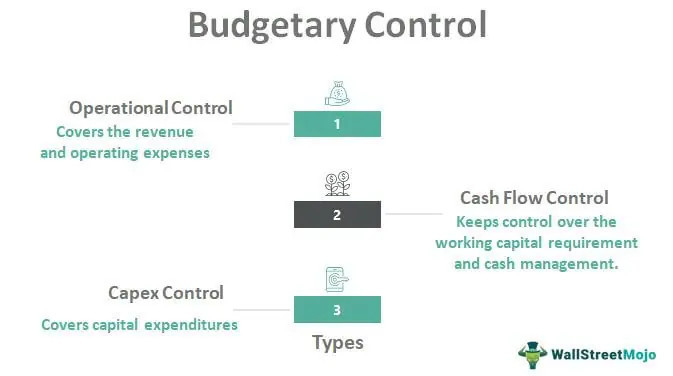
What can you do with budgetary controls ?

1. We can use this to control the cash flow.

2. Operational controls.

3. Cost analysis for the business

1. Using budgetary control to monitor the cash flow.

budgeted cash flow forecast is another form of budgetary control.

with a proper cash flow forecast, we can monitor the cash flow when we compare the forecast and the actual.

2. Operational controls

by having a good budgetary control, we are able to identify the weakness and highlight the needs to take rectification action.

When the analytical review is done to compare the actual against the budget, we are able to identify the area need more attention.

At the same time, we can also use the analysis to implement better control.

3. Cost analysis of the business.

Budgetary control enables us to find out areas which need to be controlled.

using budgetary control, and from the analysis, we are able to find out which sectors’ costs are not in the norm of the business operation.

We can then take necessary action to arrest the worsening situation.

Conclusion.

Budget is a plan devised to help a business operate in a more orderly and systematic manner.

It is a yardstick for a business to measure performance and improve efficiency.

By having a good budget and using it as budgetary control, a business will be able to have a good business plan which cover all spectrum of the business.

With a good business plan, a business is able to improve and grow according to plan.

Therefore, let us prepare a good budget and use it in a positive way as a tool for budgetary control.